
PDO and AOC

Protected Designation of Origin & Controlled Designation of Origin

PDO

The Protected Designation of Origin

The Protected Designation of Origin (PDO) is the European equivalent of the AOC. It protects the name of a product in all European Union countries.
AOC

The Controlled Designation of Origin (AOC)

The Controlled Designation of Origin (AOC) refers to a product whose entire manufacturing process is carried out according to recognized expertise within a specific geographical area, which gives the product its characteristics.
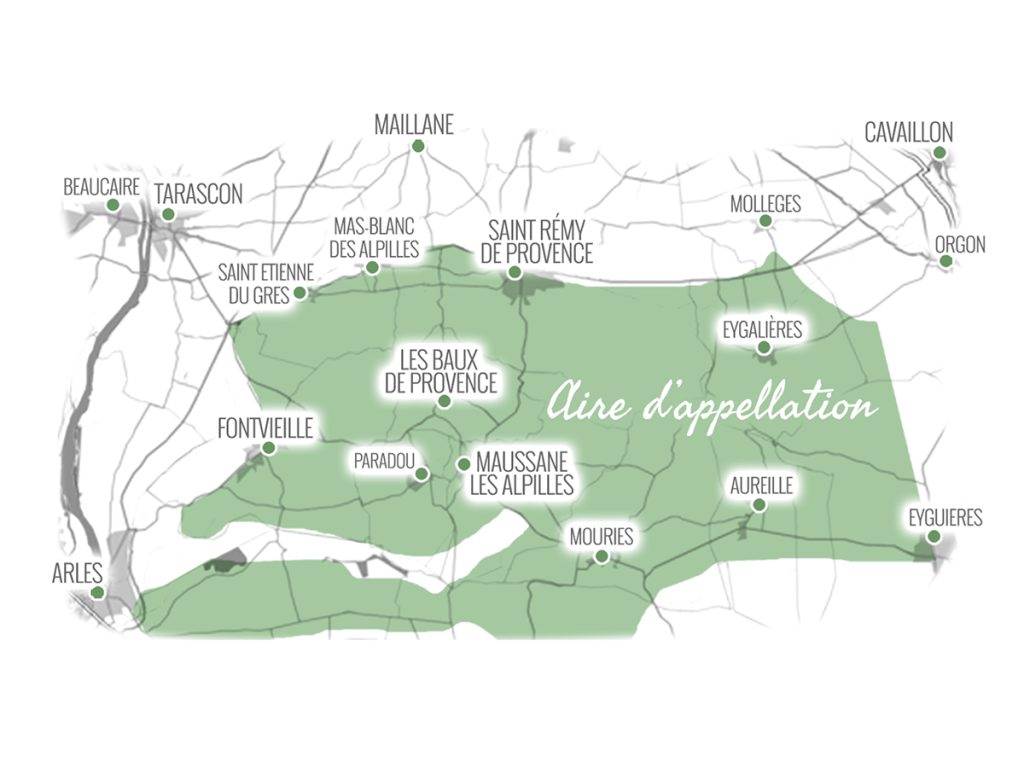
The PDO Vallée des Baux de Provence label on an olive oil bottle guarantees the following:

  • a production area
  • olive varieties: main (Salonenque, Béruguette, Grossane, and Verdale des Bouches-du-Rhône) and secondary (Picholine and various others)
  • a planting density between 150 and 416 trees per hectare
  • regular maintenance of the orchards
  • a yield not exceeding 6 tons/Ha
  • harvesting of healthy, ripe olives
  • the processing plant or Mill must be located within the production area and use only mechanical processes for cold extraction of the oil
  • obtaining an approval certificate issued by the INAO after tasting by a jury and analysis of the sample.

AOC

At the end of the 19th century, during a period of intensifying global trade, a political will emerged to protect the reputation of French products with a collective sign: Appellation d’Origine Contrôlée, or AOC for short.

It was by a decree-law of 1935 concerning the defense of the wine market that the government created wines with controlled designation of origin and the body responsible for their definition, protection, and control.
The French policy for promoting agricultural products inspired the development of European regulations. The aim of these regulations is to harmonize regional labels: thus, the AOC has the PDO as its European equivalent. Since May 1, 2009, the PDO appears on all European products whose production, processing, and elaboration are carried out in a determined geographical area, according to recognized expertise and specific specifications.
To clarify the offer to consumers, since January 1, 2012, concerned products must only bear the PDO mention; only wines are authorized to bear the French controlled designation of origin (AOC).
The PDO mention is issued by a public institution: the National Institute of Designations of Origin (INAO) to guarantee an intimate link between the product and the terroir:

  • A circumscribed geographical origin with its own geological, agronomic, and climatic characteristics.
  • Production conditions that are the result of a culture and history, taking into account local and constant practices.
  • An analytical and organoleptic examination of the products organized under the responsibility of the INAO.

PDO

On August 27, 1997, the French government recognized by decree the three AOCs, which have since become PDOs, for olive products from the Vallée des Baux de Provence:

  • Cracked Olives from the Vallée des Baux de Provence
  • Black Olives from the Vallée des Baux de Provence
  • Olive Oil from the Vallée des Baux de Provence

This was the culmination of work carried out by the Interprofessional Olive Growers’ Syndicate of the Vallée des Baux de Provence with the INAO to recognize the specific characteristics of olive productions, and to promote traditions and centuries-old expertise in olive growing.
The PDO extends over 1,700 hectares, northeast of the Bouches du Rhône, in the heart of the Alpilles mountain range. This limestone massif, with a maximum altitude of 498 meters, stretches for about thirty kilometers between Salon de Provence to the east and Arles to the west. The olive-growing soils are composed of limestone pebbles, allowing natural drainage, favorable to olive cultivation.

La newsletter Castelas