A Respected Natural Rhythm
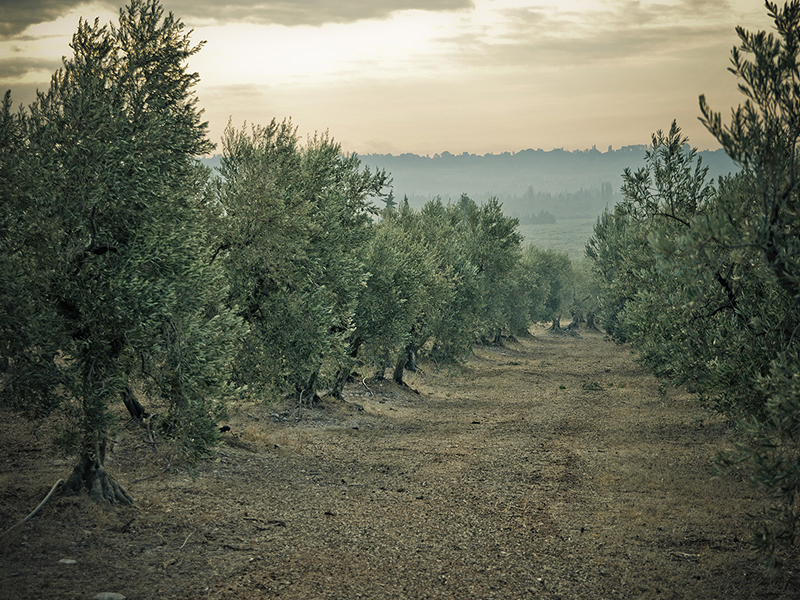
At Moulin CastelaS, we move with the seasons.
From spring awakening to winter dormancy, we adapt our actions and decisions to the olive tree’s natural rhythm.
Observing, intervening, sometimes waiting: this tempo shapes the fruits and gives rise to olive oils with unique character and aromas.
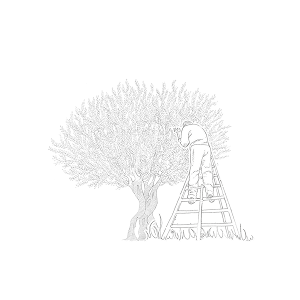
Like any fruit tree, the olive tree tends to alternate, meaning it produces fruit every other year. To remedy this phenomenon, we regularly prune our olive trees.
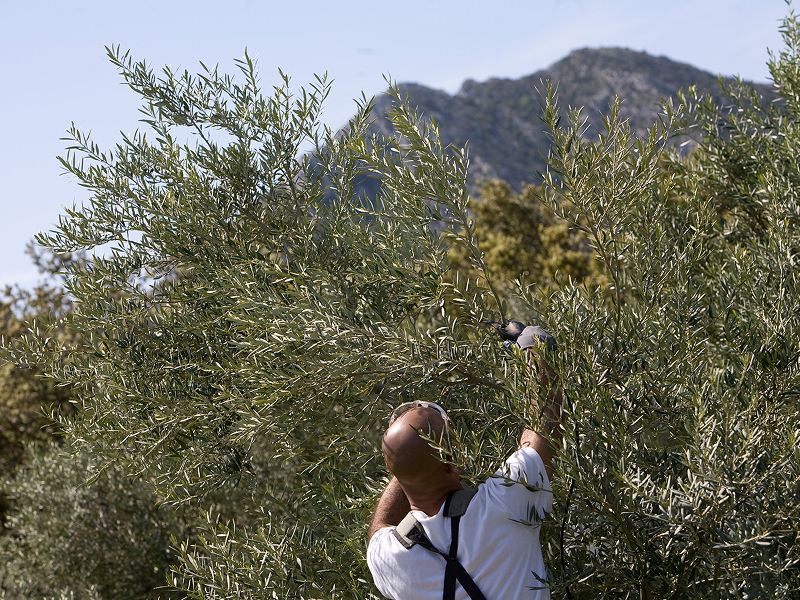
The operation consists of removing the wood that bore fruit the previous year, thus promoting the production of young, vigorous wood capable of yielding a new and abundant harvest.
Pruning requires precision in the gesture. It is essential to maintain a consistent foliage density to allow light to pass through, which is vital for fruit growth and acts as a protective film for the bark against sun scorching.
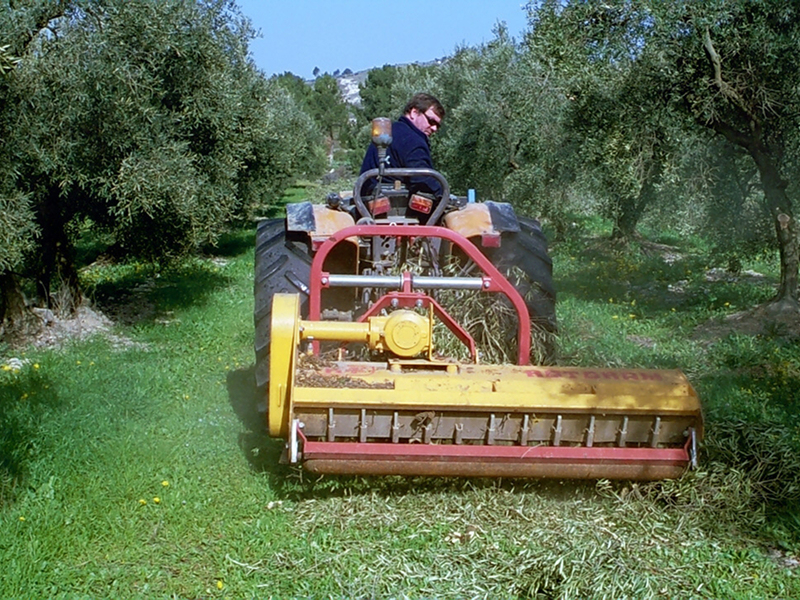
At Castelas, tree pruning takes place from March, after the risk of frost. The cut branches are shredded, and the fertilizing elements are thus reincorporated into the soil.
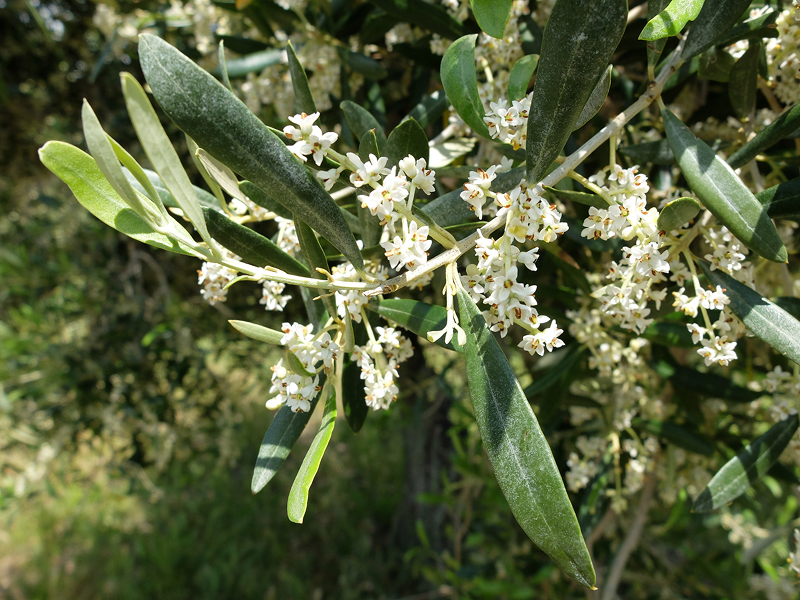
It’s time! In spring, the olive tree awakens with the appearance of new terminal shoots. The fruit buds lengthen, round out, and swell until they burst and the flower appears.
This is flowering. It occurs around May 15th. The trees display a multitude of white, fragrant flowers. Only 5% of them will produce olives!
The magic of this moment lasts only one week, during which climatic conditions must be favorable: a light wind is ideal for carrying pollen, while rain
or fog reduces the chances of pollination. As soon as the flowers fade, their core transforms into young fruits.
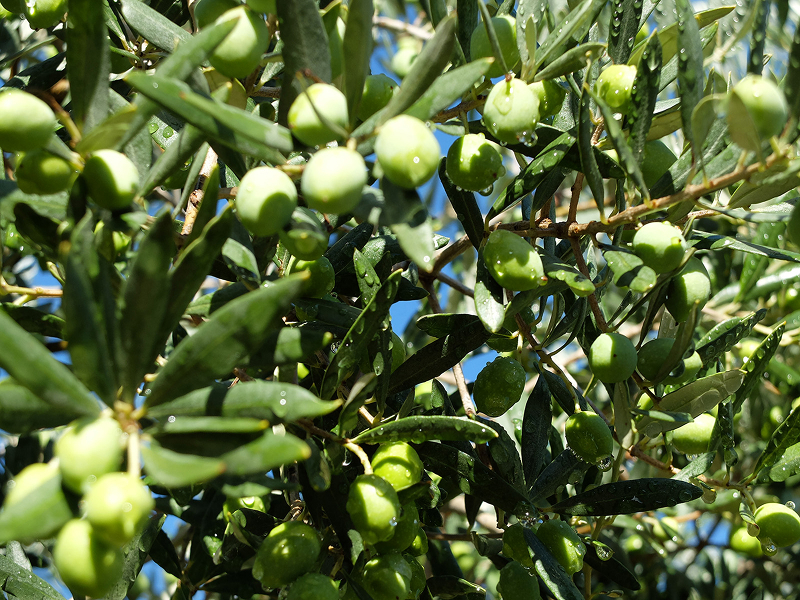
First olives! The green olives grow steadily and pass through the pit hardening stage.
In summer, the olive tree indulges in a “short nap.” Its activity slows down, and its leaves curl up to protect themselves from the scorching sun that beats down on Provence in summer.
A good rain around August 15th is enough to see it revive and literally come back to life.
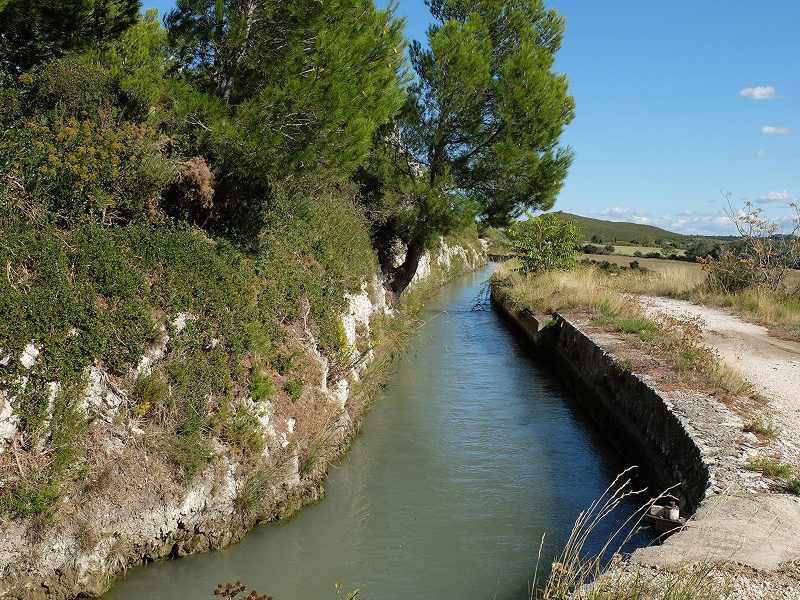
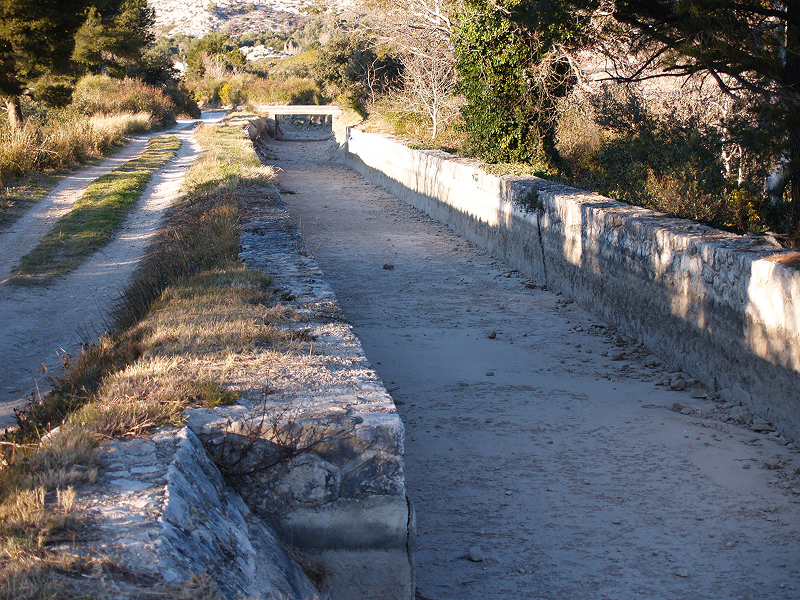
Despite popular belief, the olive tree does not refuse a little water, especially when rainfall becomes scarce. In the Baux Valley, we are fortunate to have access to water from the canal, which was put into service in July 1914.
The canal originates in Eyguieres via the Boisgelin canal (1672) and Craponne (1554), which is itself fed by the waters of the Durance.
Thanks to irrigation, our plots are covered with grasses that shelter a rich fauna of beneficial insects, the trees better resist summer heat, and they retain their olives until harvest.
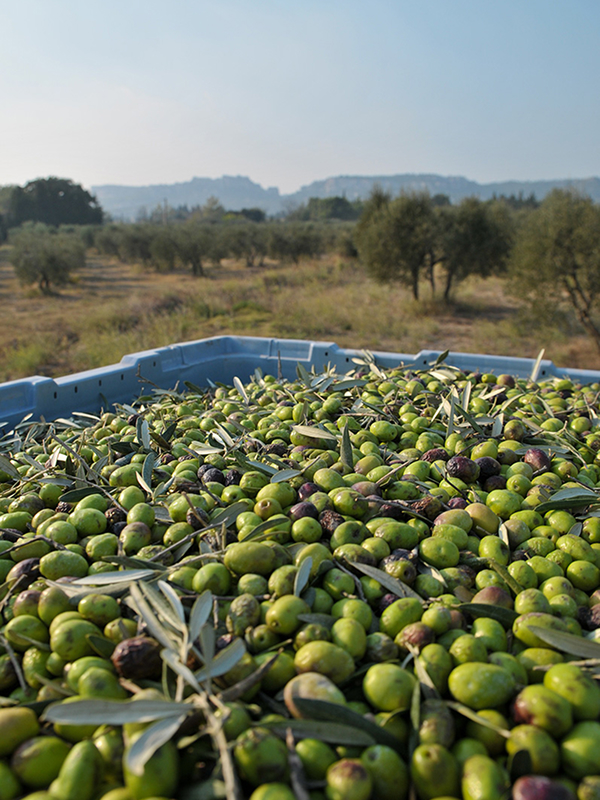
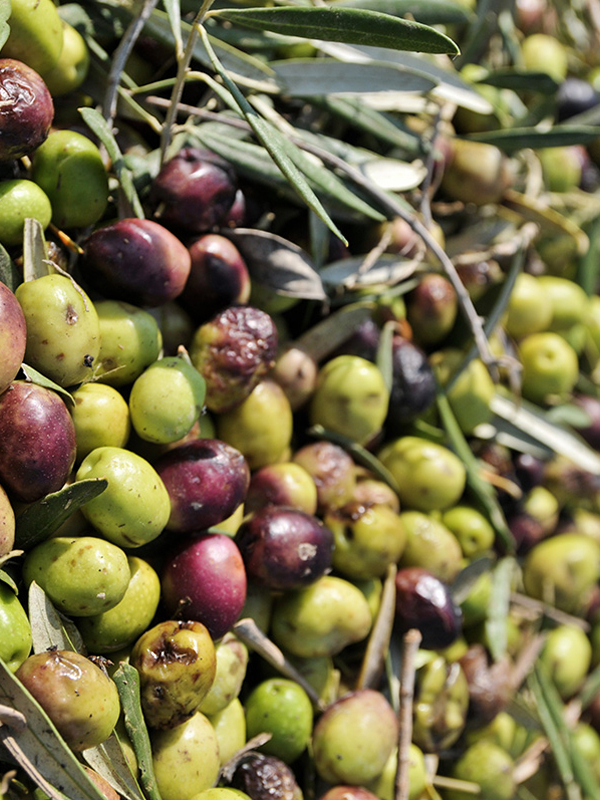
The harvest! The fruits continue to grow until maturity. The olives change color, for some varieties, from tender green to yellow, then to mauve and black.
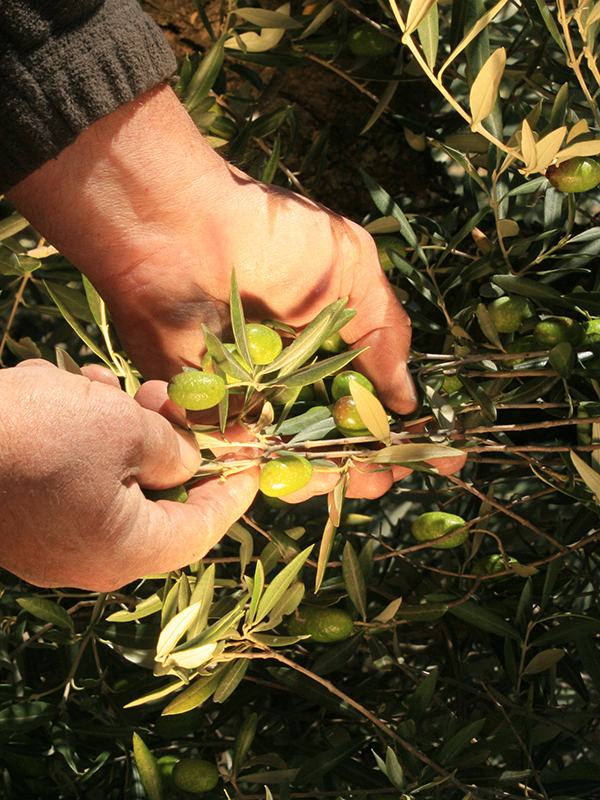
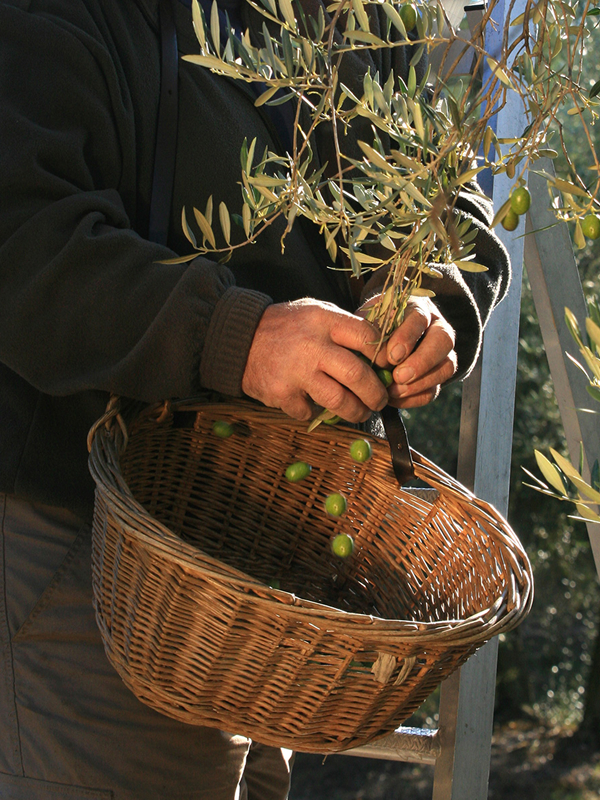
The harvesting of green table olives takes place mainly in September and is done by hand to select color and size: in order, Salonenque for crushing, Béruguette for crushing, then Verdale and Rédounale.
The mill opens its doors from mid-October to the end of November each year to receive oil olives.
This is the time of the “olivades” and a much-anticipated moment in the Baux-de-Provence Valley. A festive atmosphere, tinged with the ripe and fruity scent of olives, permeates our orchards.
The harvest begins under a bright sun and ends in freezing cold, often swept by gusts of Mistral.
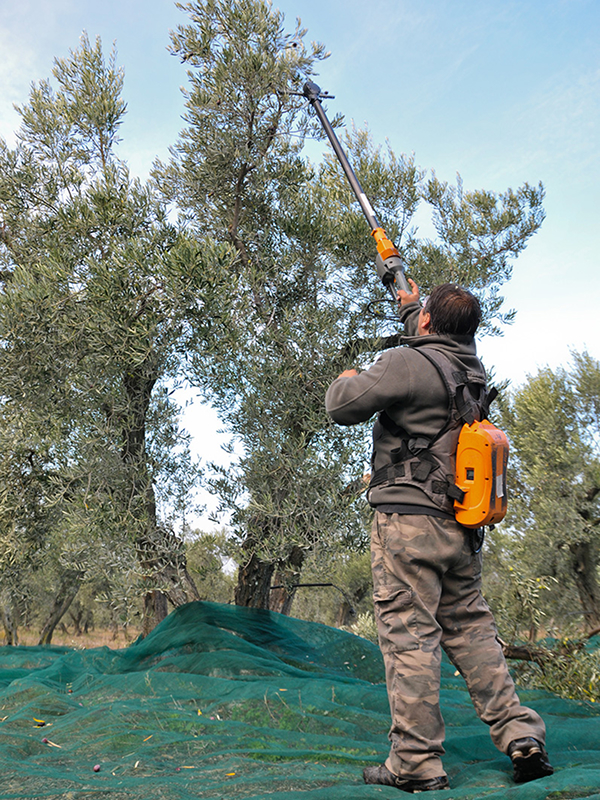
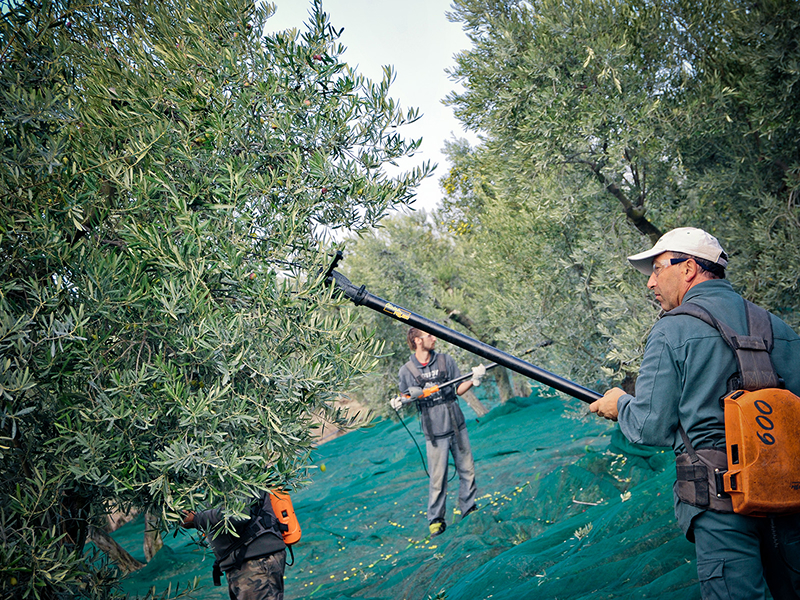
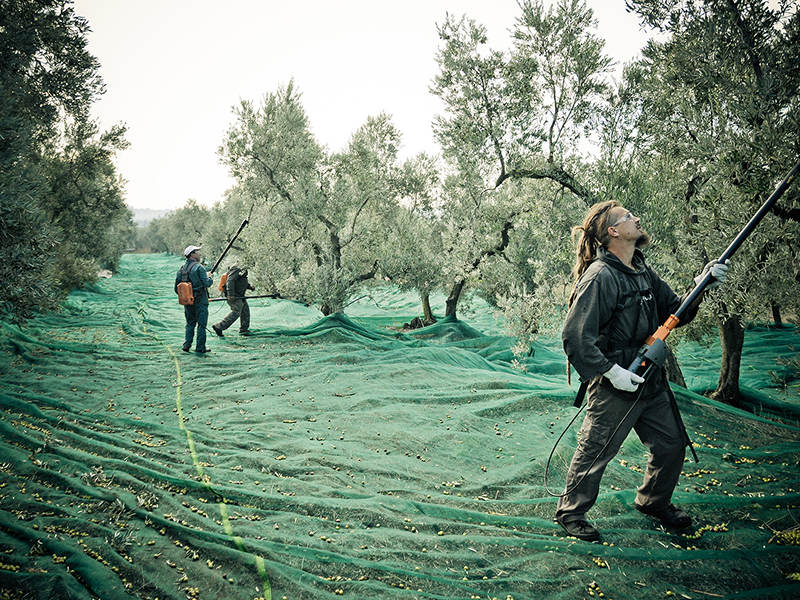
Nets are installed along the entire length of the rows to collect the olives harvested with a vibrator and combs.
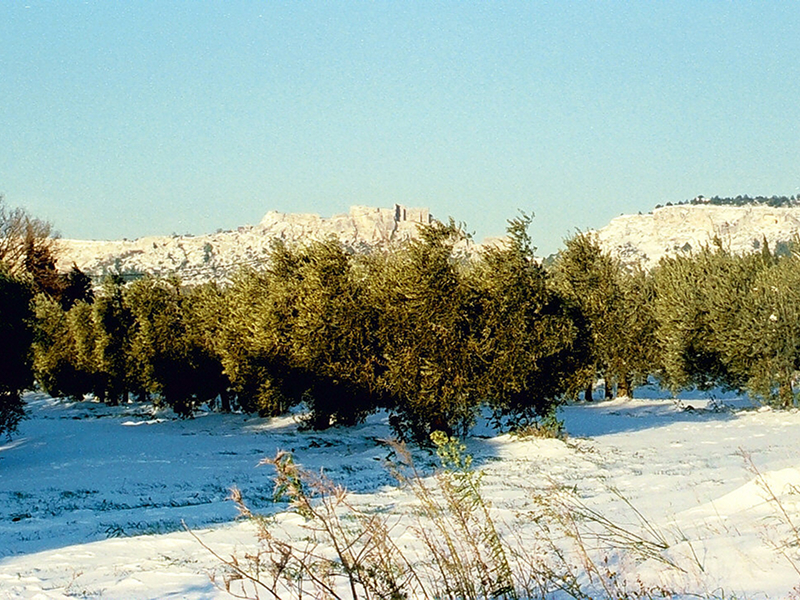
Hush! Winter is a time of rest for the olive tree. It enters dormancy. However, cool temperatures are essential for the sufficient generation of flowers, and then fruits.
This is the time to provide the nutritional elements the olive tree needs for its spring growth. Nitrogen, phosphorus, and potassium are the main components. We provide these elements in winter, in the form of compost.
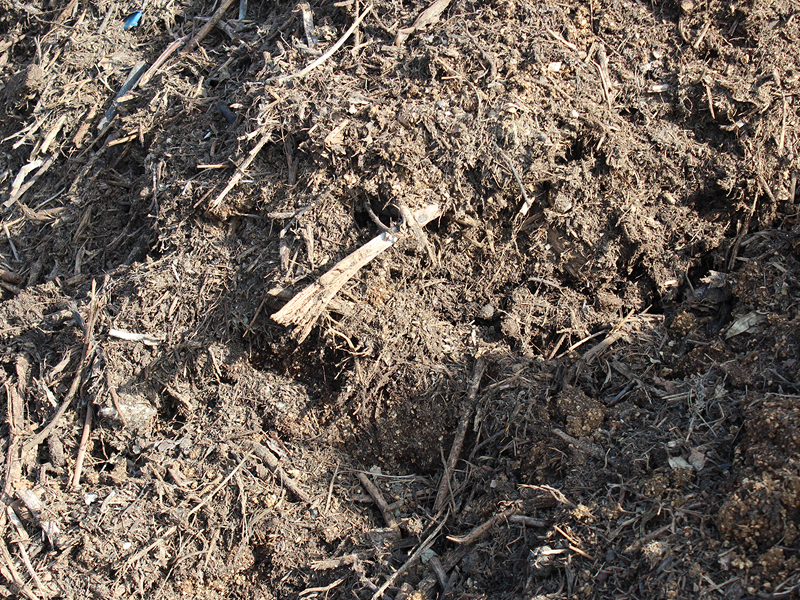
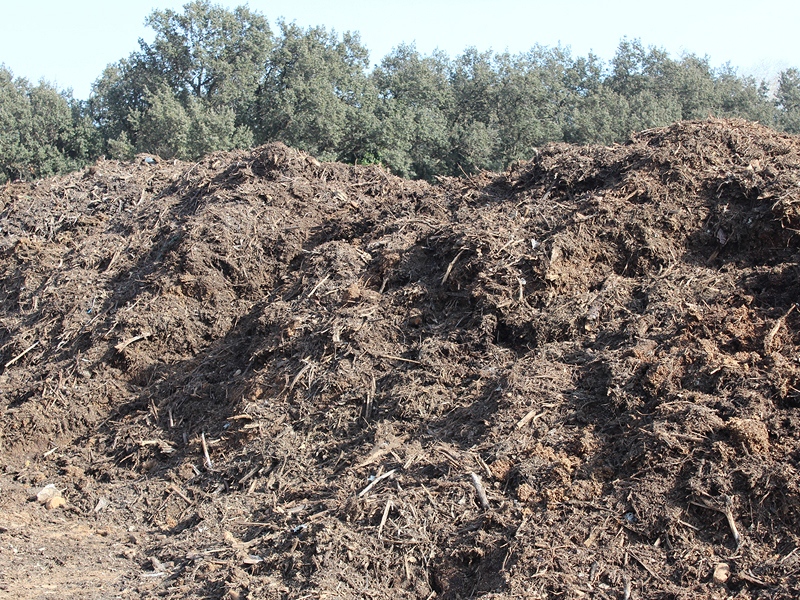
Composting has been implemented in the Aulnes orchard where we have space. Composting is a natural degradation process of organic matter by microorganisms, in the presence of humidity and oxygen. Composting allows us to recycle pomace or wet waste from the mill, to which we add green waste and tree cuttings. The compost becomes fertilizer after 6 months. It will be spread in the orchards.
Provence at the Heart of Our Oils